Podcast for Local Business Visibility: A Practical Guide
A podcast for local business visibility is a targeted audio marketing channel that puts your expertise in front of community members who are actively searching for services like yours. Unlike social media posts that disappear in hours, podcast episodes compound over time. They rank in search results, surface in Apple Podcasts and Spotify directories, and build the kind of trust that paid ads rarely achieve. For business owners in Tyler, Texas and across East Texas, this medium offers a direct line to local listeners who prefer learning from voices they recognize. This guide covers the platforms, SEO tactics, and promotion strategies that turn a simple audio show into a genuine visibility engine.
What platforms and tools are essential for a local business podcast?
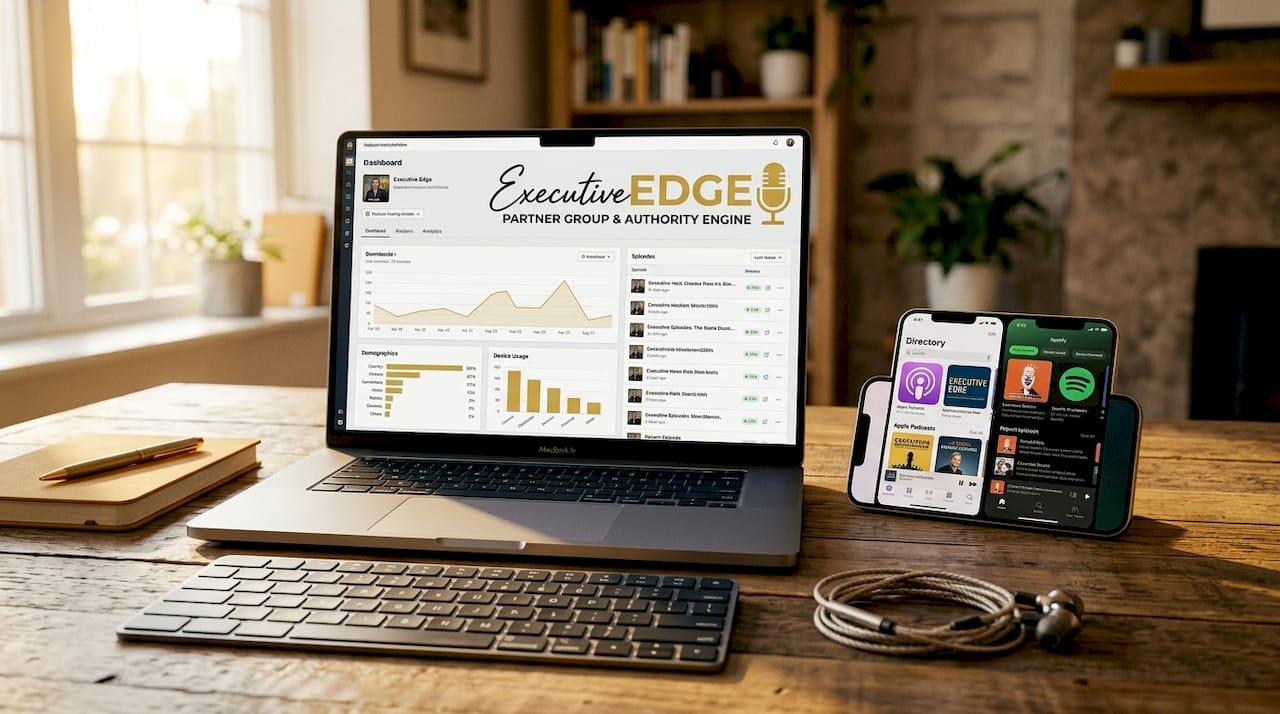
Launching a podcast for local business visibility starts with choosing the right infrastructure. The hosting platform you select determines how your show distributes across directories, how your analytics look, and whether your episode pages get indexed by Google.
Hosting platforms to consider:
Ausha offers built-in distribution to Apple Podcasts, Spotify, Amazon Music, and Deezer, plus SEO-optimized episode pages out of the box.
Anchor (now Spotify for Podcasters) is free and distributes automatically to major directories, making it a low-barrier starting point.
Buzzsprout and Podbean both generate embeddable players and RSS feeds that push to all major apps simultaneously.
The directories that matter most for local discoverability are Apple Podcasts, Spotify, YouTube, and Google Podcasts (now folded into YouTube Music). Distributing across multiple apps maximizes audience reach because different listener segments use different platforms.
Beyond hosting, each episode needs its own web page. This is where most local business podcasters leave visibility on the table. A dedicated episode page with a URL, SEO-optimized title, show notes, and a full transcript creates a searchable asset that Google can crawl and rank. Using schema.org PodcastEpisode markup with AudioObject structured data makes your episodes indexable by Google, directly improving web discoverability. That means your episode on “best HVAC contractor in Tyler” can appear in a Google search result, not just inside a podcast app.
PlatformDistributionEpisode pagesAnalyticsAusha20+ directoriesYes, SEO-readyDetailedSpotify for PodcastersSpotify + partnersLimitedBasicBuzzsproutAll major appsYesModeratePodbeanAll major appsYesModerate
Pro Tip: Treat every episode page like a mini landing page. Include a keyword-rich title, a 200-word summary, chapter timestamps, and a full transcript. This single habit separates podcasts that rank from those that stay invisible.
How do you optimize podcast content to boost discoverability for local listeners?
Podcast SEO operates on two tracks: in-app ranking signals inside Apple Podcasts and Spotify, and traditional web search ranking through Google. Both matter, and they require different tactics.
For in-app discoverability, your show title and episode titles carry the most weight. A title like “Tyler Roofing Tips: What Homeowners Need to Know Before Storm Season” targets a specific local search intent far better than “Episode 12: Roofing Advice.” Include the service category and city name naturally in your title and description. Google ranks podcasts higher when episodes contain fresh, relevant content matched to local intent, which means “service + city” phrasing in your metadata directly improves search presence.
For Apple Podcasts chart performance, listener behavior is the ranking signal. Apple Podcasts chart rankings depend on recent in-app engagement and listener completion rates, updating several times daily. A listener who finishes your episode sends a stronger ranking signal than one who drops off at the two-minute mark. This means your content quality is your SEO strategy.
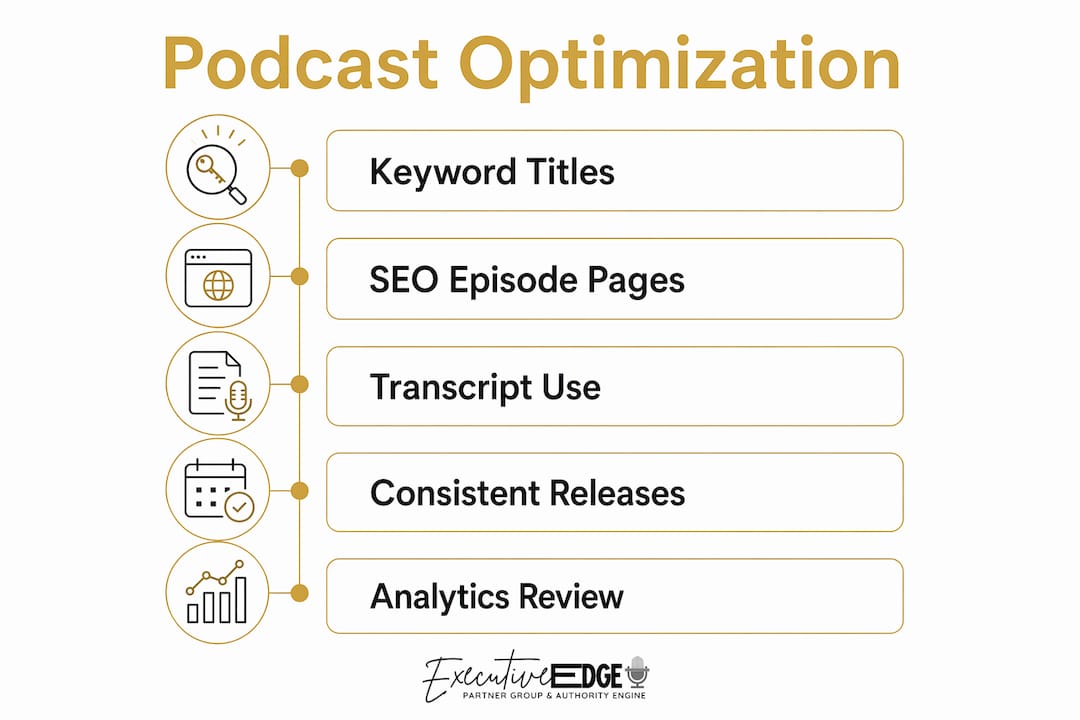
Here is a step-by-step approach to optimizing each episode:
Write a keyword-rich title. Lead with the service or topic, then add the city or region. Keep it under 60 characters so it displays fully in app listings.
Write show notes with natural language. Summarize the episode in 150 to 250 words using the phrases your local audience actually searches. Avoid stuffing keywords into every sentence.
Publish a full transcript. Full transcripts with structured data are the single biggest SEO boost for podcast episode pages. They give Google text to crawl and can generate featured snippets.
Hook listeners in the first three minutes. A strong opening hook within the first one to three minutes increases completion rates, which directly impacts app chart rankings.
Publish on a consistent schedule. Fresh, recent content signals active relevance to both Google and podcast app algorithms.
A real-world example of this working: Bloom Local used keyworded titles and transcripts to grow website traffic by 40% in six months and increase premium sales by 25%. That result came from treating podcast SEO as a web content strategy, not just an audio publishing task.
What multi-channel strategies amplify a local podcast’s reach?
Publishing an episode and waiting for listeners to find it is the slowest path to growth. The fastest path is repurposing each episode into multiple content formats and distributing them where your local audience already spends time.
Repurposing podcast episodes into blog posts, video snippets, and social media clips increases content output by 300% without requiring new material. One 30-minute episode can become a blog post, three Instagram audiograms, a LinkedIn article, a YouTube short, and an email newsletter. Each format reaches a different segment of your audience and creates additional search entry points.
Repurposing workflow for local business podcasters:
Blog post: Use the transcript as a draft. Edit it into a 600 to 800-word article with internal links and a local call to action.
Audiograms: Pull a 60-second clip with a strong quote or tip. Add captions and your logo. Post to Instagram Reels, Facebook, and TikTok.
LinkedIn post: Summarize the episode’s main insight in three paragraphs. Tag any local guests or businesses mentioned.
Email newsletter: Write a two-paragraph summary with a direct link to the episode page. Include one question to encourage replies.
YouTube video: Upload the full audio with a static image or simple video background. YouTube is the second-largest search engine and indexes podcast content independently.
For social media distribution, adapt your message to each platform’s format. Facebook favors longer posts with community questions. Instagram rewards visual audiograms with text overlays. LinkedIn performs best with professional insight posts. A well-structured social media workflow keeps this repurposing process consistent without consuming your entire week.
Consistent multi-platform distribution combined with a regular communication cadence increases listener base and local recognition over time. Partnering with local businesses or community figures for guest episodes also accelerates cross-promotion. When a local guest shares the episode with their own audience, you inherit their credibility and reach.
Pro Tip: Schedule your episode release and all repurposed content in a single two-hour block each week. Batch the blog post, social clips, and email in one session so promotion never falls behind publishing.
How do you measure podcast performance and grow your local audience?
Tracking the right metrics tells you whether your podcast is building real visibility or just accumulating downloads that never convert. The metrics that matter most fall into three categories: in-app engagement, web traffic, and conversion signals.
MetricWhat it measuresWhy it mattersCompletion rate% of episode listeners finishDrives app chart rankingsSubscriber growthNew follows per episodeSignals audience retentionEpisode page trafficWeb visits from searchMeasures SEO effectivenessKeyword rankingGoogle position for episode titlesTracks local search visibilityPromo code redemptionsListener conversionsConnects podcast to revenue
Use these steps to build a measurement routine:
Review in-app analytics weekly. Most hosting platforms show listens, completions, and subscriber spikes by episode. Look for which topics generate the highest completion rates and produce more of those.
Track episode page traffic in Google Search Console. Monitor which episode titles rank for local search queries and which generate click-throughs.
Use unique promo codes or trackable URLs in episodes. This connects audio listens to actual business inquiries, appointments, or purchases.
Collect listener feedback. Ask a direct question at the end of each episode and monitor replies. Qualitative feedback reveals what your audience wants next.
Adjust for seasonal local trends. A roofing company in East Texas should publish storm-prep episodes before spring. An accountant should release tax-planning content in Q4. Aligning topics with local buyer timing improves both relevance and conversion.
The most common performance mistake is ignoring the first three minutes. If your completion rate drops sharply in the opening segment, your hook is not strong enough. Rewrite your episode intros to open with the most useful or surprising insight first, then provide context. This single adjustment consistently improves retention metrics.
What I’ve learned about podcasting and local visibility
Most local business owners approach podcasting the way they approach a billboard. They put it up and expect the audience to come. That is not how this medium works.
The businesses I have seen succeed with local podcasting share one habit: they treat every episode as a conversation with a specific person in their community, not a broadcast to a faceless crowd. They answer the exact questions their customers ask in consultations, reviews, and phone calls. That specificity is what drives completion rates, and completion rates are what drive rankings.
The compounding effect is real but slow. The first ten episodes rarely move the needle on web traffic or in-app rankings. Episodes eleven through thirty are where the SEO gains start to show up, especially when each one has a properly structured episode page with a transcript. I have watched businesses go from zero podcast presence to ranking on page one of Google for competitive local service queries within six months, purely through consistent episode publishing and transcript-based SEO.
The other thing most guides miss: promotion timing matters as much as content quality. Publishing on Tuesday morning outperforms Friday afternoon for most service-based audiences. Sending your email newsletter within two hours of episode release captures the highest open rates. These details feel minor but they compound into measurably larger audiences over a 12-month window.
— David Domm
How Executive Edge Partner Group helps local businesses grow through podcasting

Executive Edge Partner Group runs a done-for-you authority-building system built specifically for local business owners who want the visibility benefits of podcasting without spending 20 hours a week producing content. The system handles episode strategy, SEO-optimized show notes, transcript production, structured data markup, and multi-platform distribution so your podcast works as a genuine search asset from day one.
If you are a service-based business, contractor, consultant, or local brand ready to build real community authority, Executive Edge Partner Group provides the infrastructure and strategy to make it happen. The team specializes in local market positioning, GEO and AEO optimization, and content amplification across Google, YouTube, and AI-driven discovery platforms.
FAQ
What is a podcast for local business visibility?
A podcast for local business visibility is an audio show produced by a local business to attract community listeners, build brand authority, and improve discoverability across podcast directories and Google search results.
How long does it take to see SEO results from a local business podcast?
Most businesses see measurable web traffic growth from podcast episode pages within three to six months, particularly when each episode includes a full transcript and structured data markup.
Do I need expensive equipment to start a local business podcast?
A USB microphone like the Blue Yeti or Audio-Technica ATR2100x, combined with free recording software like Audacity or GarageBand, is sufficient to produce professional-quality audio for a local audience.
How does Apple Podcasts decide which shows rank higher?
Apple Podcasts rankings are driven by recent listener engagement signals, including completion rates and new subscriber activity, updated multiple times per day.
Can a podcast replace other local marketing channels?
A podcast works best as a complement to existing channels. Local intent signals like relevance and prominence still require a strong Google Business Profile and consistent web presence alongside your audio content.